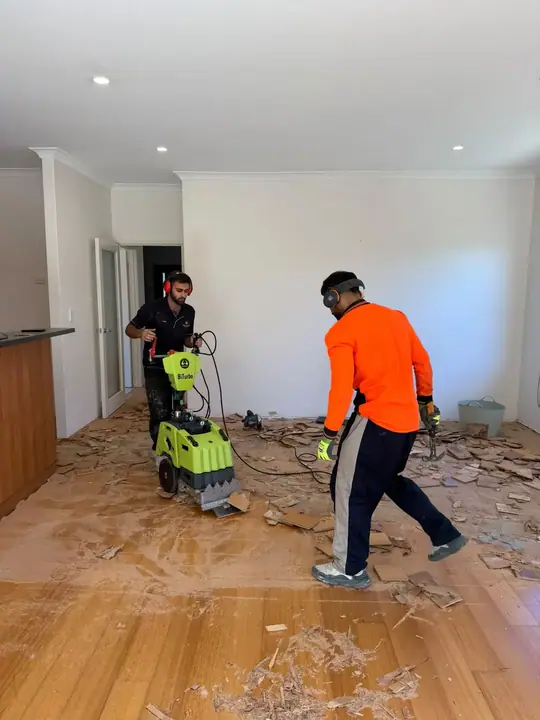
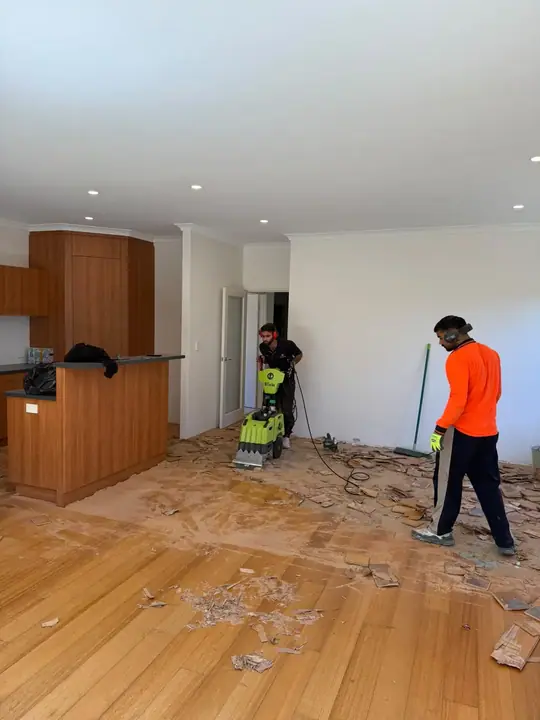
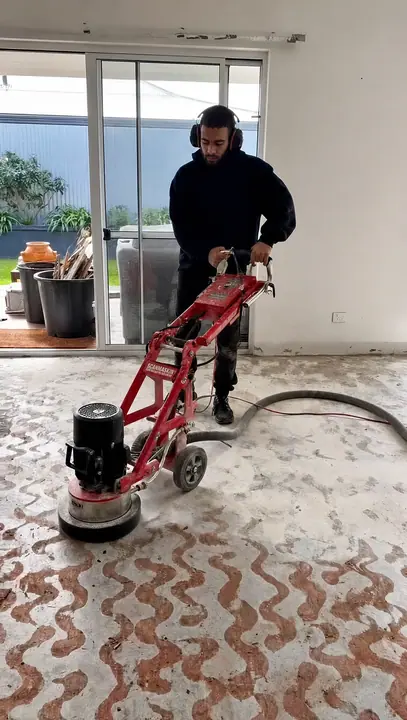
Diamond Grinding
Laitance, paint, glue residue and high spots taken off with dust-extracted diamond grinders until the slab is sound and open.
Service
Grinding, moisture testing, priming and self-levelling. The part nobody sees, and the only reason the floor above it stays flat, quiet and stuck down.
Overview
A timber floor is only ever as good as the surface it is bonded to. Perth slabs are rarely as flat as the plans say they are — there are trowel ridges, plumbing patches, high spots at the pour joins and dips where the screed ran thin. Lay a floor over that and you get hollow spots, movement, and adhesive that never properly grabs.
Preparation is the least glamorous part of what we do and the part we argue about most. We grind the slab back to a clean, sound, open surface, test it for moisture, prime it, and bring it to flatness with a self-levelling compound where it needs one. Only then does anything get laid on it.
We use the systems the adhesive manufacturers actually specify — Sika, Uzin, Wakol, Bona and Pallmann primers, membranes and compounds — because a warranty on a $15,000 floor is worth more than the fifty dollars saved by mixing brands.
What's Included
No line items appearing halfway through the job. This is the scope, quoted once, after we have seen the floor.
Laitance, paint, glue residue and high spots taken off with dust-extracted diamond grinders until the slab is sound and open.
Slabs are tested before anything is bonded to them. If the reading is over what the adhesive system allows, we say so rather than laying and hoping.
Where a slab is green or the reading is marginal, a two-part epoxy moisture barrier goes down so the floor is not sitting on a problem.
Shrinkage cracks cut, filled and reinforced so they do not track up through the new floor.
Pumped or poured and spiked flat, feathering out dips and taking the whole floor to a tolerance the boards can live with.
Straight-edged and checked before sign-off, because finding a hump after the glue is spread is nobody's idea of a good day.
How It Works
Slab inspected, moisture tested, flatness checked with a straight edge and the problem spots marked up.
Dust-extracted diamond grinding back to clean, sound concrete with an open surface profile for the primer to key into.
Primer, and a moisture barrier where the readings call for one, applied to the manufacturer's specification.
Self-levelling compound laid to the depth the floor needs, spiked out and left to cure properly before anything goes on top.
Recent Work
Photographs from our own sites, not a stock library. Tap any image to open the full gallery.
Local Detail
Concrete in Western Australia can look bone dry and still be carrying enough moisture to destroy an adhesive bond. New slabs need months, not weeks, and even older slabs behave differently in a coastal suburb than they do inland. Most flooring adhesives and underlays cap in-slab relative humidity around 75 per cent — over that, a moisture barrier is not optional.
Flatness matters just as much. Manufacturers typically want no more than about 3 mm of deviation under a 2 metre straight edge before a floating floor goes down, and direct-stick is less forgiving again. Very few Perth slabs arrive that way on their own, which is why levelling compound is the single most common line item we add after a strip-out.
Questions
Because the top layer of a finished slab — the laitance — is weak, sealed and often contaminated with paint, plaster and glue. Adhesive bonds to whatever it touches, so if it touches laitance the bond is only as strong as that thin, crumbly layer.
With an in-slab relative humidity test rather than a surface reading, because surface meters tell you about the top few millimetres and nothing about what is coming up from underneath. The result determines whether a moisture barrier is needed.
We install a two-part epoxy moisture barrier, or we wait. Laying a timber floor onto a slab that is still giving up water is the fastest way to cupping, adhesive failure and a floor that has to come up again.
Most compounds are walkable within a few hours and ready to lay on the following day, depending on depth, temperature and humidity. We will give you a realistic date rather than an optimistic one.
We will not know until the old floor is off and we can put a straight edge across it. It is quoted after the strip-out for exactly that reason — anything else would be a guess with your money.
Yes. Particleboard and plywood subfloors get checked for movement, re-fixed where they are loose, and levelled or overlaid where the surface is not good enough to lay on.
Related
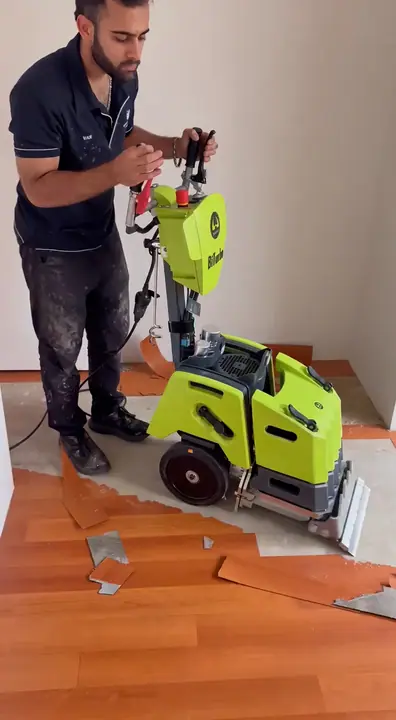
Old boards, tiles, carpet, glue and staples lifted, bagged and carted away.
View service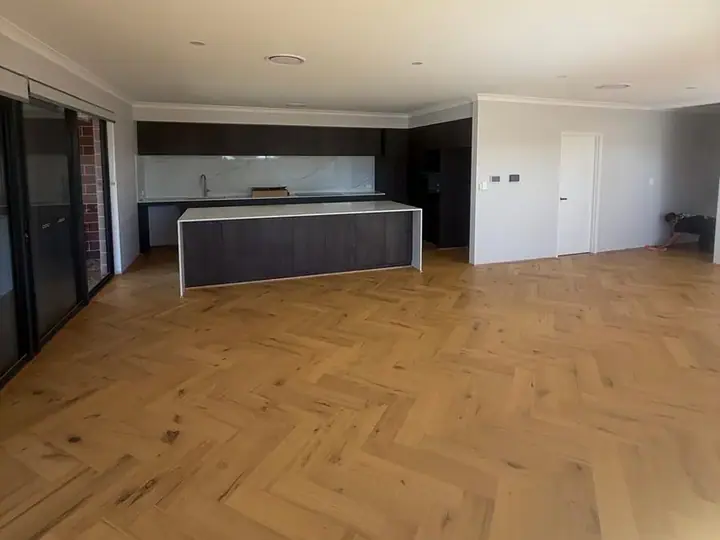
Real timber over a stable core — warmth of hardwood, better stability.
View service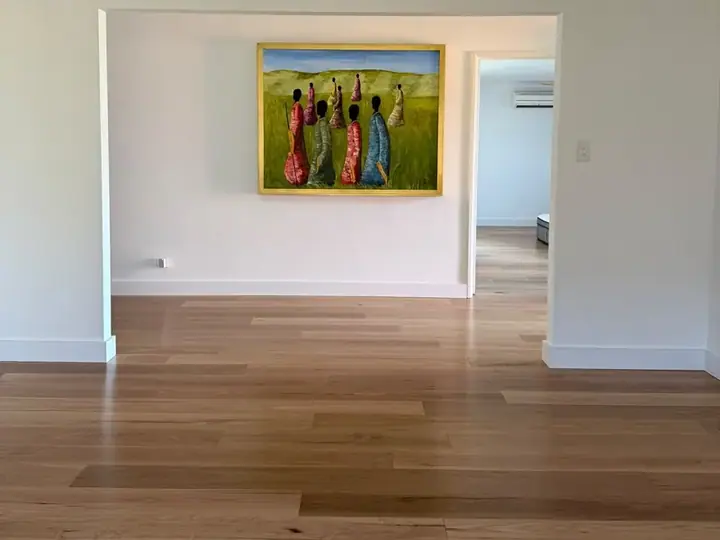
Factory-finished solid boards in Australian species, walkable same day.
View serviceFree Measure & Quote
Free on-site measure across Perth. We quote the whole job — removal, preparation, installation and trims — as one number.