The Complete Guide to Vinyl Plank Flooring
Discover the benefits, durability, styles, and maintenance of vinyl plank flooring, plus why it suits Australian homes in 2026.
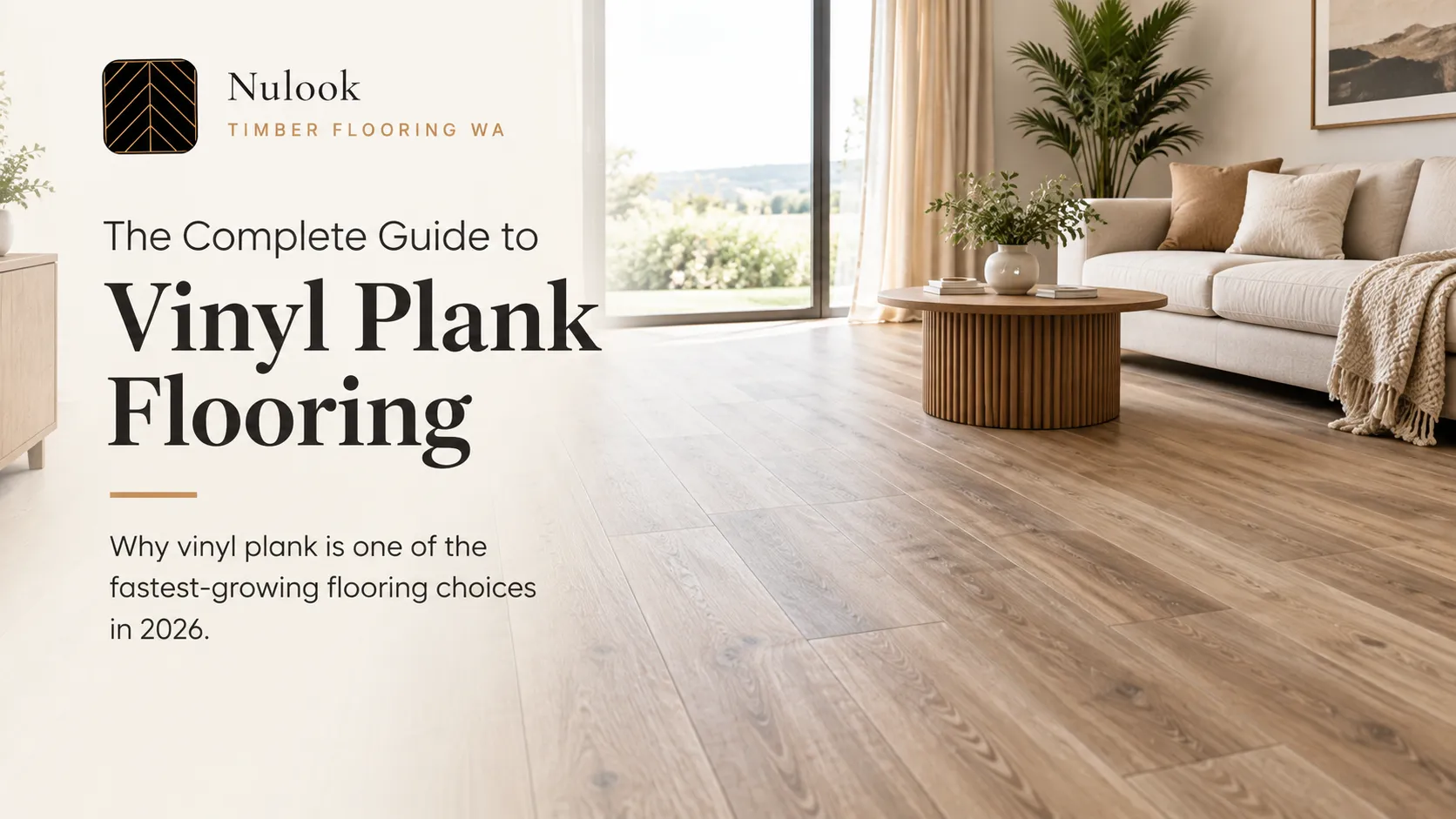
Vinyl plank flooring (LVP) has become one of the most popular choices for homeowners thanks to its water resistance, affordability, and realistic wood-look finishes. Over the past few years, it has moved from being a budget-friendly alternative to a genuinely premium flooring option that many homeowners now choose over hardwood, especially in busy households. In this guide, we'll walk through everything you need to know before deciding whether vinyl plank is the right choice for your home.
What Exactly Is Vinyl Plank Flooring?
Vinyl plank flooring is a synthetic flooring product designed to replicate the look of natural hardwood, while offering far greater durability and water resistance. It's built in layers — typically a wear layer on top for scratch and stain resistance, a printed design layer that creates the realistic wood-look finish, and a core layer that provides structure and, in many modern products, waterproofing.
Unlike traditional sheet vinyl, vinyl plank comes in individual plank-shaped pieces that click together, making installation faster and giving the finished floor a more authentic, seamless hardwood appearance.
Why Homeowners Are Choosing Vinyl Plank
There are a few clear reasons vinyl plank has become so popular:
- Water resistance — many vinyl plank products are 100% waterproof, making them ideal for kitchens, bathrooms, laundry rooms, and basements
- Durability — the wear layer resists scratches, dents, and stains far better than laminate or natural wood
- Affordability — vinyl plank typically costs less than hardwood or engineered wood, without sacrificing much on appearance
- Easy installation — most products use a simple click-lock system, which can reduce labor time and cost
- Low maintenance — no refinishing, no special cleaning products, and no worrying about humidity warping the boards
- Comfort underfoot — many vinyl plank products have a slightly cushioned feel compared to tile or hardwood
Where Vinyl Plank Works Best
Because of its water resistance, vinyl plank is particularly well suited to areas where traditional hardwood would struggle:
- Kitchens, where spills are common
- Bathrooms and laundry rooms, where moisture is a constant factor
- Basements, which are prone to humidity and occasional dampness
- High-traffic living areas and hallways, where durability matters most
- Rental properties, where low-maintenance flooring reduces turnover costs
Comparing Vinyl Plank to Other Flooring Types
| Feature | Vinyl Plank | Laminate | Solid Hardwood |
|---|---|---|---|
| Water resistance | Excellent (often waterproof) | Poor to fair | Poor |
| Durability | Very good | Good | Excellent (but scratches show) |
| Installation | Easy, click-lock | Easy, click-lock | Requires professional install |
| Comfort underfoot | Soft, slightly cushioned | Firm | Firm |
| Refinishing possible | No | No | Yes (multiple times) |
| Typical price range | $ | $ | $$$$ |
| Best for | Kitchens, bathrooms, basements | Living rooms, bedrooms | Living rooms, formal spaces |
As the table shows, vinyl plank's biggest advantage over both laminate and hardwood is its water resistance — which is exactly why it has become the go-to choice for rooms where moisture is unavoidable.
What to Look for When Choosing Vinyl Plank
Not all vinyl plank products are the same, and quality can vary significantly. Here's what's worth paying attention to:
- Wear layer thickness — a thicker wear layer (measured in mils) means better resistance to scratches and wear over time, especially important for homes with pets or kids
- Waterproof vs. water-resistant — some products are fully waterproof (rigid core, WPC or SPC), while others are only water-resistant; for bathrooms and kitchens, fully waterproof is worth the investment
- Plank thickness — thicker planks tend to feel more solid underfoot and can help hide minor subfloor imperfections
- Finish and texture — look for embossed textures that mimic real wood grain for a more authentic look
- Warranty — a longer warranty is often a good indicator of product quality and manufacturer confidence
Our Installation Process
- Free on-site measure — we assess your space and discuss which vinyl plank options suit your needs
- Material selection — choose from our current range of colors and textures
- Subfloor preparation — we ensure the subfloor is clean, level, and ready for installation
- Installation — precise, efficient installation using the click-lock system
- Final walkthrough — we inspect every plank with you to make sure it meets our standard
Most vinyl plank installations are completed faster than hardwood or tile projects, often within a single day for standard-sized rooms.
Frequently Asked Questions
Is vinyl plank flooring really waterproof?
Many modern vinyl plank products are fully waterproof, thanks to a rigid core construction. However, not all vinyl plank is created equal — it's worth confirming waterproof ratings before choosing a product for wet areas like bathrooms.
How long does vinyl plank flooring last?
With proper care, quality vinyl plank flooring can last 15-20 years, and sometimes longer depending on the wear layer thickness and amount of foot traffic.
Can vinyl plank be installed over existing flooring?
In many cases, yes — vinyl plank can often be installed over tile, hardwood, or concrete, as long as the existing surface is flat, clean, and in good condition. We assess this during your free on-site measure.
Is vinyl plank flooring good for homes with pets?
Yes — its scratch resistance and water resistance make it one of the most practical choices for pet owners, especially compared to solid hardwood.
How does vinyl plank compare in cost to hardwood?
Vinyl plank is typically significantly more affordable than solid hardwood, both in material cost and installation, while still offering a similar visual appeal.
Is Vinyl Plank Right for Your Home?
If you're looking for a flooring option that combines durability, water resistance, and an authentic wood-look finish — without the maintenance demands or higher price tag of hardwood — vinyl plank is worth serious consideration. It's particularly well suited to busy households, rental properties, and any room where moisture is a regular concern.
Ask us about our current selection of LVP colors and textures, and we'll help you find the right fit for your space and budget.